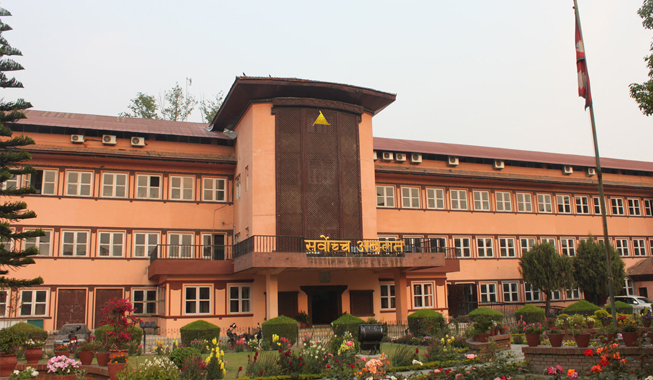
कुनै एक निकायमा अत्यधिक शक्ति केन्द्रित हुन नदिन नेपालको सरकारलाई तीन स्वतन्त्र अङ्गमा विभाजन गरिएको छ। यस सिद्धान्तलाई शक्ति पृथकीकरण भनिन्छ।
१. कार्यपालिका
कार्यपालिकाले कानुनको कार्यान्वयन गर्छ। मुख्य पदहरू:
राष्ट्रपति — राज्यको औपचारिक प्रमुख
प्रधानमन्त्री — सरकारको प्रमुख, मन्त्रिपरिषद्को नेतृत्व गर्ने
मन्त्रिपरिषद् — विभिन्न मन्त्रालयको नेतृत्व गर्ने मन्त्रीहरू
२. व्यवस्थापिका
व्यवस्थापिकाले कानुन बनाउँछ र कार्यपालिकाको निगरानी गर्छ। नेपालमा द्विसदनात्मक संसद् छ:
प्रतिनिधि सभा — २७५ सदस्य, तल्लो सदन
राष्ट्रिय सभा — ५९ सदस्य, माथिल्लो सदन
यी दुवै मिलेर संघीय संसद् बन्छ।
३. न्यायपालिका
न्यायपालिकाले कानुनको व्याख्या गर्छ र विवाद समाधान गर्छ:
सर्वोच्च अदालत — सर्वोच्च तहको अदालत, प्रधानन्यायाधीशको नेतृत्वमा
उच्च अदालत — प्रत्येक प्रदेशमा एक
जिल्ला अदालत — ७७ जिल्लामध्ये प्रत्येकमा एक
नियन्त्रण र सन्तुलन
प्रत्येक अङ्गले अरूको शक्तिमा नियन्त्रण राख्न सक्छ:
व्यवस्थापिकाले प्रधानमन्त्रीविरुद्ध अविश्वासको प्रस्ताव पारित गर्न सक्छ
सर्वोच्च अदालतले कुनै कानुनलाई असंवैधानिक घोषित गर्न सक्छ
कार्यपालिकाले निश्चित संवैधानिक व्यवस्थाअन्तर्गत संसद् विघटन गर्न सक्छ
शक्ति पृथकीकरण बुझ्दा सरकारको कामको जवाफदेहिता खोज्दा कुन निकायमा जाने भन्ने नागरिकलाई थाहा हुन्छ।
The Three Branches of Government
Nepal's government is divided into three independent branches to prevent any single entity from holding too much power. This principle is called separation of powers.
1. Executive (कार्यपालिका)
The executive branch implements and enforces laws. Key positions include:
President (राष्ट्रपति) — Ceremonial head of state
Prime Minister (प्रधानमन्त्री) — Head of government, leads the Council of Ministers
Council of Ministers (मन्त्रिपरिषद्) — Cabinet members who head various ministries
2. Legislature (व्यवस्थापिका)
The legislature makes laws and oversees the executive. Nepal has a bicameral parliament:
House of Representatives (प्रतिनिधि सभा) — 275 members, lower house
National Assembly (राष्ट्रिय सभा) — 59 members, upper house
Together they form the Federal Parliament (संघीय संसद्).
3. Judiciary (न्यायपालिका)
The judiciary interprets laws and resolves disputes:
Supreme Court (सर्वोच्च अदालत) — Highest court, headed by the Chief Justice
High Courts (उच्च अदालत) — One in each province
District Courts (जिल्ला अदालत) — One in each of 77 districts
Checks and Balances
Each branch can check the powers of the others:
The legislature can pass a vote of no confidence against the Prime Minister
The Supreme Court can declare laws unconstitutional
The executive can dissolve parliament under certain constitutional provisions
Understanding the separation of powers helps citizens know which institution to approach when seeking accountability for government actions.
बिटा संस्करण / Beta Version: हामीले प्लेटफर्ममा ठूलो सुधार गरेका छौं। केही सानातिना समस्या आउन सक्छ जुन हामी छिट्टै समाधान गर्नेछौं।
We've done a massive overhaul. Expect a few kinks — we'll iron them out in the coming days.
AI सहायक / AI Assistant कुनै पनि पृष्ठमा तल्लो दायाँ कुनामा च्याटबट पाउनुहुनेछ। नेपाली वा अंग्रेजीमा सोध्नुहोस् — सरकार, निर्वाचन, वा प्लेटफर्मबारे। Look for the chatbot in the bottom-right corner. Ask anything about governance, elections, or the platform — in Nepali or English.
नमस्कार! म तपाईंको HamroNeta AI सहायक — स्वकीय हुँ। नेपालको शासन, सांसद, वा नीतिका बारेमा सोध्नुहोस् — वा तल टाप गर्नुहोस्।
Hello! I'm your HamroNeta AI assistant, Swakiya. Ask about Nepal's government, MPs, or policy — or tap an option below.